2026-10-11 ·
Local Rules for Transporting Biohazard Materials From Dennis Properties
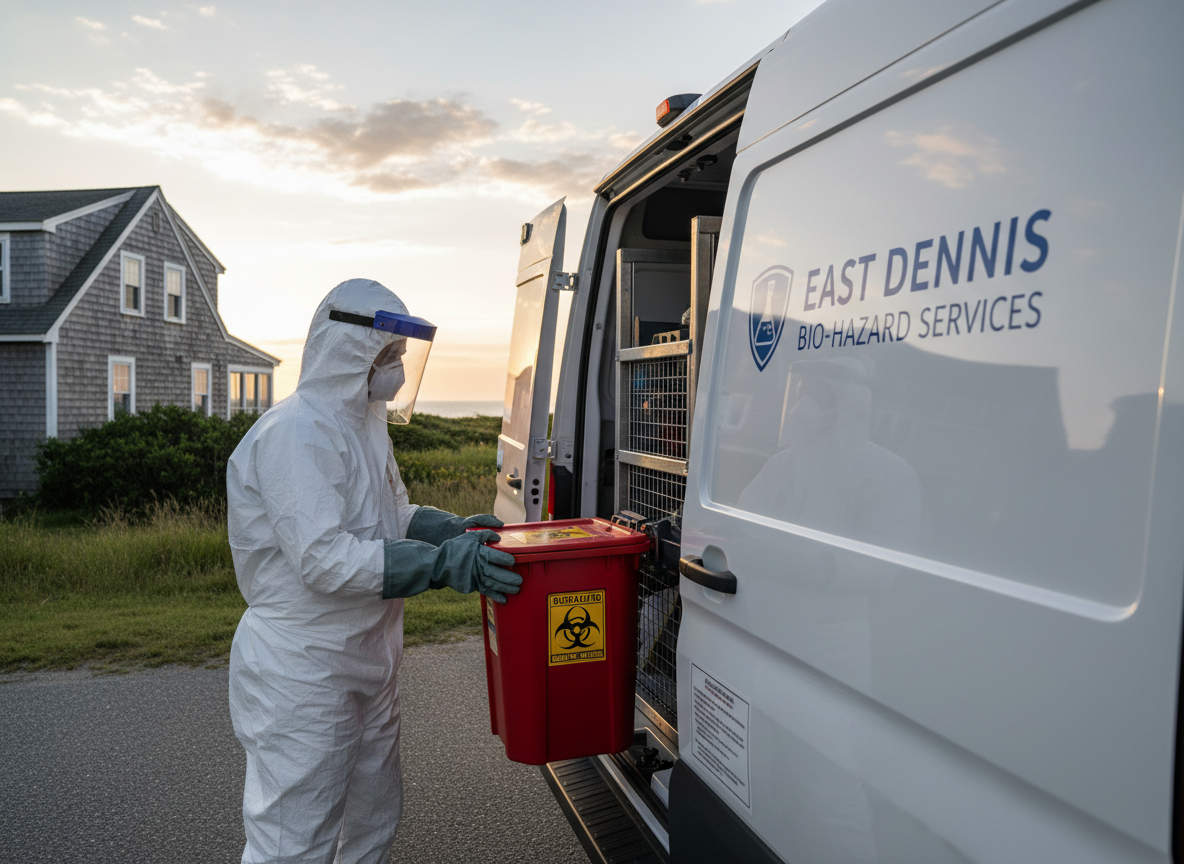
Massachusetts Department of Public Health and federal DOT rules require triple packaging, absorbent materials, and rigid outer containers for any biohazard load leaving a Dennis property. Crews must label each container with the biohazard symbol and maintain a chain-of-custody form throughout the trip to the disposal facility.
Packaging Requirements for Dennis Properties
Properties in East Dennis often feature older Cape-style homes with narrow driveways and limited turnaround space near Cold Storage Beach. Crews therefore pre-stage sealed 5-gallon or 30-gallon containers at the curb before loading to avoid repeated trips through tight yards. In humid continental conditions moderated by the ocean, condensation inside vehicles can compromise labels, so crews use moisture-resistant tags printed with permanent ink. Routes passing Sesuit Harbor boat ramps see extra vibration from uneven pavement, requiring extra strapping every 12 inches along the container length. Nearby Dennis and Brewster properties share similar stock of 1950s–1970s construction, so crews carry extra absorbent pads sized for 40-gallon spills common in those basements.
Vehicle and Route Considerations in Barnstable County
Transport vehicles must display the biohazard placard on all four sides when carrying regulated waste through Barnstable County roads. Summer traffic on Route 6A near Brewster forces crews to schedule departures before 7 a.m. or after 7 p.m. to maintain safe following distances. Winter salt air accelerates corrosion on metal container latches, so operators inspect seals after every coastal run. When loads originate from properties backing onto Sesuit Harbor, crews add secondary containment trays to catch any leakage during the short but bumpy ride over the drawbridge. These steps keep the material contained regardless of the 24/7 schedule operators maintain year-round.
Documentation and Hand-off at Disposal Facilities
Every load from a Dennis address must carry a completed Massachusetts infectious-waste manifest listing the generator address, waste category, and transporter signature. Facilities in the region require 48-hour advance notice during peak vacation season because volume from nearby towns increases sharply. Crews retain copies of the signed manifest for three years as required by state code. When the job involves crime scene materials, teams coordinate with local law enforcement before leaving the property to ensure the manifest matches the incident report number. This paperwork trail protects both the property owner and the transporter.
Weather and Seasonal Impacts on Transport
Cape Cod’s moderated climate means crews still face sudden fog banks along the Dennis-Brewster line that can delay departures by 30–60 minutes. High summer humidity increases the weight of absorbent materials inside containers, so vehicles are weighed before and after loading to stay under axle limits on local bridges. Fall nor’easters bring standing water on access roads near Cold Storage Beach; crews therefore carry extra traction mats and reroute through inland Dennis streets when possible. These adjustments keep transport times predictable even when conditions change quickly.
For readers handling related situations, see the service page on Crime Scene Cleanup and the article What East Dennis Residents Pay for Biohazard Cleanup After an Unattended Death. Additional guidance appears in Preparing a Cape Cod Home for Biohazard Risks Before Winter and the Dennis service area overview at /areas/dennis.